

“Be still, and know that I am God! I am exalted among the nations, I am exalted in the earth.” (Psalm 46:10)


Homily
Receptive to the Gospel — Friday, July 24, 2026
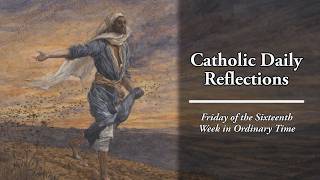
Jesus said to his disciples: “Hear the parable of the sower. The seed sown on the path is the one who hears the word of the Kingdom without understanding it, and the Evil One comes and steals away what was sown in his heart. The seed sown on rocky ground…” Matthew 13:18–20
After preaching the Parable of the Sower to the crowds and then explaining to His close disciples (likely the Twelve) the purpose of parables, Jesus, in today’s Gospel, offers them an interpretation of the parable. He speaks clearly and personally to them because they are open—their hearts are properly disposed to receive the truth.
The parable reveals four kinds of hearts: hardened, shallow, distracted, and receptive. By presenting these four interior dispositions, with only one being ideal, Jesus shows that becoming receptive to the Word of God takes effort, humility, and grace. The first three types reflect a progression of deepening receptivity, but each falls short. The final type, the good soil, represents the goal to which all hearts are called.
💠The first—represented by seed sown on the path—refers to those whose hearts are so hardened that God’s Word cannot enter. Their ears hear the Word of God—as symbolized by the sower sowing seed on the path—but the soil of their hearts has been trampled by many sins and self-centered habits, so the seed cannot penetrate. As a result, they do not understand the Gospel, nor do they seek to understand. This might even refer to some who attend church, hearing the readings and the homily, yet remain unmoved by the Gospel.
💠The second—represented by seed sown on rocky ground—refers to those whose hearts are shallow. They receive the Word of God with initial joy and enthusiasm, perhaps even with emotion and spiritual fervor. But that joy is not rooted in deep conviction or sustained by persevering faith. When trials come—when faith demands sacrifice, endurance, or courage—they quickly fall away, disillusioned. The root of divine truth never penetrates the deeper layers of the soul. These are those who like the idea of the Gospel but not the cost that comes with living it fully.
💠The third—represented by seed sown among thorns—refers to those whose hearts are distracted. They welcome the Word of God and allow it to take root, but they simultaneously cling to worldly anxieties, attachments, and desires. The thorns—symbolizing wealth, comfort, ambition, and the cares of daily life—choke the Word so that it becomes fruitless. These are the souls who try to live both for God and for the world. They desire Heaven, but they also crave control, pleasure, or security on their own terms. In such soil, the Word struggles to grow and cannot bear lasting fruit.
Reflect today on the progression revealed in this parable. How open is your heart to the Word of God? As a spiritual seed, God’s Word is powerful. When received into a mind filled with faith, and a heart filled with hope and charity, the seed is nurtured and grows. As it grows, authentic transformation takes place. Good fruit becomes evident, and God does great things in and through this holy soul. See yourself on this journey, till the soil, and await God’s Word as it is sown. Receive it with joy, and resolve to nourish that seed so that an abundance of good fruit may be borne from your life—thirty, sixty, or a hundredfold.
My Divine Sower, You sow the seed of Truth generously and abundantly. You are always speaking to me, revealing Your Love and Your perfect Will, yet I am often hardhearted, shallow, or distracted. Please till the soil of my heart and make me receptive to all You reveal, so that my life may bear an abundance of good fruit for Your Kingdom. Jesus, I trust in You.
Source: mycatholic.life
Share: