

I am the way, and the truth, and the life. No one comes to the Father except through me. (John 14:6)


Provincial Message
When the Wine Runs Out, Mary’s Faith Hopes in God’s Hour
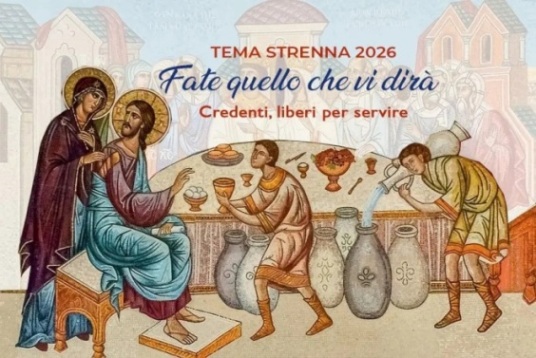
With a grateful heart that is in communion with the whole Salesian Family of our province, I write this circular to you as we conclude the year 2025 and enter into a new year 2026, another year of blessing that the Lord is gifting us with. We have received the Strenna 2026 given by our beloved Rector Major, Don Fabio Attard: “Do whatever he tells you” – Believers, free to serve. In his good night at the end of the winter session of the General Council, he summarized the Strenna in four verbs emphasizing that we as Salesians need to learn to a) LOOK, b) LISTEN, c) CHOOSE and d) ACT, like Mary of the Gospel, St. Francis de Sales our Patron and St. John Bosco our Father and Founder. The Strenna comes to us not simply as a theme for the year, but as a spiritual gift and a call that seeks to shape our way of believing, living, and serving the young entrusted to us. In this circular, I shall summarise the Strenna, reflect on it wherever possible and interpret it further for our context. However, it would not be in detail, as we shall meet in January for the Strenna dissemination.
Understanding the Strenna 2026 in Context
In recent years, the Rectors Major have helped us to walk a coherent and deeply an evangelical path. The Strenna 2024 “The dream that makes you dream: A heart that transforms ‘wolves’ into ‘lambs’” invited us to rediscover the heart of St. John Bosco and the centrality of the Preventive System lived as a spirituality of presence and accompaniment. The Strenna 2025, “Anchored in hope, pilgrims with young people,” placed us within the Jubilee journey of the Church, reminding us that Christian hope is not merely an optimistic feeling or a cognitive-emotional orientation, but a lived trust in God who is already at work and continues to guide history. This emphasis on hope was particularly illuminated during the celebration of the 150th anniversary of the first Salesian missionary expedition, a powerful reminder that St. John Bosco’s hope was active, courageous, and missionary.
The Strenna 2026 “Do whatever He tells you”: Believers, free to Serve takes the next decisive step. It leads us from hope to faith lived concretely in obedience and service. Keeping the Strenna at the background of our reflection, we cannot but contemplate on St. John Bosco, a man of deep and living faith, a believer totally united with God, capable of discerning God’s will and responding without fear or delay. His heart, though rooted in Valdocco, was open to the whole world because it was rooted first in God. This same conviction emerged strongly during the World Salesian Family Consultation in June 2025, where faith was recognized as the foundation that gives essence to hope and direction to the Salesian mission. The biblical verse chosen for the Strenna “Do whatever he tells you” places us at Cana, beside Mary, the first and perfect disciple. In her brief but powerful invitation, we find the attitude of a true believer: attentive listening, radical trust, free and generous action or service. Mary does not replace Christ; she leads us to Him. She teaches us that authentic faith is not passive, fearful, or self-protective, but confident and available to God’s surprising ways.
In this sense, the Strenna speaks clearly of the wider journey of the Church in our time. Pope Francis had repeatedly reminded us that faith is not an abstract idea or a private refuge, but a lived relationship that begins with listening and leading to action. In Lumen Fidei (LF), he stated clearly that “faith is born of an encounter with the living God who calls us” (LF n. 4), and therefore faith always involves responding to a voice that addresses us personally. This ‘listening faith’ sheds light on the whole of life, because “faith, received from God as a supernatural gift, becomes a light for our way” (LF n. 5), guiding concrete choices, attitudes, and commitments. Such faith, the Pope insisted, is inseparable from trust and obedience. Reflecting on Mary’s journey of faith, he reminded us that “the Virgin Mary advanced in her pilgrimage of faith” (LF n. 58), and taught the Church that believing means entrusting oneself totally to God’s Word, even when the path is not clear. These notions resonate deeply with the Strenna’s invitation, “Do whatever he tells you” and these words of Mary are an expression of faith that is free, courageous, and open to God’s action. Faith, Pope Francis continued, is never closed in on itself as “those who believe are transformed into new creatures” (LF n. 21), capable of living for others and offering their lives in service. This vision finds a privileged place in the Church’s mission to the young. Pope Francis reminded us that faith grows when it is shared and lived in relationship. “The light of faith is unique, since it is capable of illuminating every aspect of human existence” (LF n. 4). When we accompany young people with this faith, we help them discover not a set of rules for a good life, but the light that gives meaning, direction, and hope to their lives.
In continuity with this vision, Pope Leo XIV has repeatedly emphasized that faith and hope cannot be separated from obedient listening to God’s will. In his early pastoral teaching, he has presented hope not as passive waiting, but as confidence born of faith: a hope that frees the believer from fear and enables generous availability for mission. He emphasized during his final audience for the Jubilee year on 20th December 2025 that “without hope, we are dead; with hope, we come to the light. Hope is generative. Indeed, it is a theological virtue, that is, a strength of God, and as such it does not kill, but gives birth and rebirth. This is true strength. What threatens and kills is not strength: it is arrogance, it is aggressive fear, it is evil that does not generate anything. The strength of God gives birth. This is why I would like to say to you, finally: to hope is to generate.” Reading in this light, the Strenna 2026 invites us to rediscover how faith generates hope and hope generates faith. For a Salesian both faith and hope lead to a self-less service, especially among the young. A truly synodal Church and a truly Salesian community listen to the Spirit, walk with the young in hope, and allow faith to take flesh in concrete gestures of presence, service, and missionary dedication.
A Summary of the Strenna 2026
In the Introduction the Rector Major places the Strenna 2026 under the Gospel command of Mary at Cana, “Do whatever he tells you,” inviting the whole Congregation to rediscover a faith that is attentive, obedient, and free. For us as Salesians, this is not a slogan but a spiritual posture deeply in consonance with Don Bosco’s life, who constantly taught his boys to listen to God in the ordinary events of life, and St Francis de Sales, who insisted that true holiness is lived through loving attentiveness to God’s will. The Strenna invites us to stand before history with the eyes of faith, hearts rooted in Christ, and hands ready to serve. The Strenna has six parts. The first four parts deal with the biblical verse chosen and interpreted with the help of four verbs for our congregation. The fifth part is an invitation to celebrate the 150th anniversary of the foundation of the Salesian Cooperators: Don Bosco’s prophetic dream that continues even today. In the sixth part of the Strenna the Rector Major puts forward some pastoral proposals for living our charism more meaningfully.
In the Introduction the Rector Major gives three fundamental reflections that illumine the Strenna 2026.
a) Jesus’ First Sign is a ‘Gateway’: The wedding at Cana is presented as a gateway into understanding Jesus’ mission, revealing who he is and how God acts within human history. This first sign opens a path of trust and obedience, where the miracle flows from attentive listening. Don Bosco often led the young to such “gateways” of faith through simple experiences that awakened trust in God, while St Francis de Sales saw every gentle invitation of grace as a door through which God enters the human heart without force.
b) God’s Final Breaking into History: At Cana, God decisively enters human history not through a spectacle but through relational love and concrete concern for human joy. The Strenna highlights that Jesus transforms ordinary reality from within. Don Bosco believed deeply in this incarnational logic, convinced that God is already at work in playgrounds and workshops, while St Francis de Sales taught that God’s grace adapts itself lovingly to the concrete circumstances of each person’s life.
C) Jesus Inaugurates a Relationship of Love, a Covenant of Kindness and Abundance: The abundance of wine at Cana signifies a covenant marked by generosity and kindness rather than scarcity or fear. This abundance reflects God’s desire for full human flourishing. Don Bosco mirrored this covenantal love in his boundless patience and optimism with young people, and St Francis de Sales described divine love as expansive and gentle, drawing people freely into communion rather than constraining them.
1. LOOK – Welcoming the Signs of the Times
The Strenna begins with an invitation to look attentively at the reality, recognising that God speaks through history. This contemplative gaze is essential for us Salesians, who, like Don Bosco, must read the needs and hopes of young people with realism and faith. St Francis de Sales likewise encouraged believers to observe life carefully, convinced that God’s will is often revealed in the ordinary flow of events. In this section, three key elements are proposed for our reflection, leading us into a concluding invitation to reflect more deeply.
a) Mary was Not a ‘Neutral’ Guest: Mary’s attentive presence at Cana shows a woman deeply involved in the reality before her, sensitive to unspoken needs. Her concern becomes the starting point and a sign of God’s salvation. Don Bosco learned from Mary Help of Christians to be actively present among the young, never indifferent to their struggles, while St Francis de Sales saw Mary as the model of loving attentiveness that transforms concern into prayerful action.
b) Challenges and Difficulties must be Acknowledged and Addressed, Not Set Aside: The lack of wine symbolizes real human difficulties that cannot be ignored. The Strenna insists that faith does not deny problems but brings them honestly before the Lord. Don Bosco faced poverty, opposition, and uncertainty without denial, trusting the Divine Providence, and St Francis de Sales taught that trials are places where God gently forms the soul when met with humility and trust.
c) History is the Treasure Chest that Reveals God’s Action: The text affirms that history, even in its complexity, is the privileged place of God’s revelation. For us Salesians, this means reading the present youth situation as a sacred text. Don Bosco interpreted the social changes of his time as a call to new educational responses, while St Francis de Sales regarded personal and communal history as the unfolding story of God’s patient love.
d) Invitation to Reflection: This first section invites us to cultivate a discerning gaze, capable of seeing God at work in today’s world. In the spirit of Don Bosco and St Francis de Sales, this reflection calls us to combine realism with hope, and attentiveness with pastoral creativity.
2. LISTEN – with Deep Roots in Faith in Christ
Looking must lead to listening, and the Strenna emphasizes on listening that is grounded in faith and in Christ. Listening is not passive but relational and rooted in trust. Don Bosco constantly invited young people to listen to God’s voice through conscience and guidance, while St Francis de Sales described listening as an act of love that opens the heart to divine wisdom. This section offers three focal themes for our consideration and concludes with an invitation to personal and communal reflection.
a) Events Must be Read and Experienced in the Light of Christ: The meaning of events becomes clear only when interpreted through Christ. The Strenna urges us to avoid superficial readings of reality. Don Bosco interpreted events through prayer and spiritual accompaniment, and St Francis de Sales insisted that Christ is the key that illuminates all of life’s experiences.
b) God’s Will Emerges from the Events We Experience: God’s will is not abstract but emerges gradually through lived experiences. The Strenna calls for discernment that respects time and process. Don Bosco trusted that God’s plan unfolded step by step in the lives of the young, while St Francis de Sales emphasized gentle perseverance in discerning God’s will within daily life.
c) A Process Nourished and Enlightened by the Word: Listening is sustained by the Word of God, which shapes discernment and gives clarity. The Salesian tradition, inspired by Don Bosco, values Scripture as a guide for life and mission, while St Francis de Sales constantly recommended meditative reading of the Word as nourishment for the soul.
d) Invitation to Reflection: This section invites us to renew our commitment to deep listening, allowing Christ and his Word to shape our personal and communal discernment, in continuity with our Salesian spiritual heritage.
3. CHOOSE – Living the Call with Freedom
Listening leads to choices, and the Strenna highlights freedom as essential to authentic discipleship. Christian freedom is not self-assertion but loving response. Don Bosco respected the freedom of the young, guiding rather than forcing them, and St Francis de Sales taught that God wants free lovers, not constrained servants. This section unfolds through three points meant to guide our reflection and is completed by an explicit invitation to reflection.
a) Listening Freely with Complete Trust: Mary’s trustful listening leads to decisive action. The Strenna proposes trust as the foundation of free obedience. Don Bosco trusted God even in uncertainty, and St Francis de Sales saw trust as the soul’s peaceful resting in God’s will.
b) Every Action Makes Sense – Logos – Only in and From the Word – Logos: Human actions find their true meaning when rooted in Christ, the Logos. The Strenna reminds us that choices detached from the Word lose coherence. Don Bosco’s educational choices flowed from his Gospel vision, while St Francis de Sales grounded all action in Christ’s loving wisdom.
c) The Risk of a Faith that Adapts to the Dominant Culture: The Strenna warns against reducing faith to cultural conformity. Authentic freedom resists dilution of the Gospel. Don Bosco formed young people to be good Christians and honest citizens without compromise, and St Francis de Sales advocated gentle firmness in living the Christian faith within a secular world.
d) Invitation to Reflection: We are invited to examine our choices, ensuring that they arise from faith-filled freedom rather than convenience or pressure, following the examples of Mary our Mother, St. John Bosco our founder and St. Francis de Sales our patron.
4. ACT – Serving with Total Generosity
Choices lead to action, and the Strenna presents service as the fruit of authentic faith. Action flows naturally from communion with Christ. Don Bosco’s tireless service to the young exemplifies this generosity, and St Francis de Sales viewed service as the natural expression of love. This part presents three guiding insights for reflection and then opens the space for an invitation to reflect.
a) Serving Freely because We are Deeply-Rooted in Christ: Service becomes joyful when it is rooted in Christ. The Strenna stresses interior freedom as the source of apostolic zeal. Don Bosco’s energy came from his prayerful union with God, while St Francis de Sales taught that love makes all service light.
b) Co-workers in God’s Plan for the Young: Salesians are collaborators in God’s loving plan, especially for the young. The Strenna reaffirms our shared mission. Don Bosco saw himself as an instrument of Providence, and St Francis de Sales emphasized cooperation with Grace in God’s saving work.
c) The Boldness of Faith: Faith calls for courage and creativity. The Strenna encourages bold pastoral responses. Don Bosco’s daring initiatives were rooted in trust in Mary and God’s providence, and St Francis de Sales embodied a courageous gentleness that transformed hearts.
d) Invitation to Reflection: This section invites us to renew our generosity in mission, trusting that God works powerfully through humble service.
5. 150 Years – Salesian Cooperators: Don Bosco’s Prophetic Dream Continues
After prayerfully reading the reflections offered by the Rector Major on the 150th anniversary of the Salesian Cooperators, I feel strongly moved to share with you how this milestone truly prolongs Mary’s words at Cana: “Do whatever he tells you.” The Rector Major helps us see that this anniversary is not simply a commemoration, but a return to the very heart of Don Bosco’s prophetic intuition at Valdocco. Don Bosco was a man deeply attentive to the signs of the times, rooted in a living faith in Christ, and capable of proposing to young people and collaborators a path of life lived in freedom. From the beginning, his vision was to create a healthy and holy environment where reason and faith supported each other in a climate of loving-kindness, with the single aim of serving the young with total generosity. The Salesian Cooperators arose from this discernment as a structured and ecclesial expression of collaboration, allowing men and women to share fully in the Salesian mission while remaining in the world, united to the Congregation by a real spiritual and apostolic bond.
The Rector Major also reminds us that Don Bosco’s vision remains strikingly relevant and challenging today. The Salesian Cooperator is a “Salesian in the world,” sharing our passion for the salvation of the young while living a secular vocation. This calling unites personal holiness with apostolic responsibility and is open to everyone, whether through direct service or support offered “through others.” Drawing on the insights of Fr. Peter Braido, Fr Egidio Viganò and Fr Pascual Chávez, the Rector Major highlights the Project of Apostolic Life as a concrete path of fidelity to Don Bosco’s charism, marked by unity in diversity and strong missionary vitality. Don Bosco’s words, “I always needed everyone,” resound with renewed force, urging us not to lose the freshness of his dream. As a Province, we are invited to value and accompany the Salesian Cooperators as essential protagonists in the mission, committed to the common good, close to the poor and excluded, actively engaged in the life of the Church, and credible witnesses of the Gospel in today’s world.
The anniversary of the Salesian Cooperators highlights Don Bosco’s prophetic vision of shared mission. The Strenna recognizes this as a living expression of communion in the Church. St Francis de Sales’ vision of universal holiness resonates strongly here, affirming that all are called to participate actively in God’s work according to their state of life.
6. Some Pastoral Proposals
After carefully reading the Strenna 2026 of the Rector Major, I place before you, the pastoral proposals the Rector Major himself offers to the whole Congregation, so that they may clearly guide our reflection and action during the year.
a) “Do Whatever He Tells You”: Towards a Pedagogy of Personal Listening: We are invited to promote a pedagogy that places listening at the centre of our pastoral and educational practice, helping young people and adults to discern God’s voice in their concrete life situations. This proposal is deeply rooted in Don Bosco’s preventive system, founded on dialogue, trust and accompaniment, and in the spirituality of St. Francis de Sales, marked by patience, respect and confidence in God’s gentle action.
b) Mary at Cana: Educator of Genuine Freedom: The Rector Major proposes Mary as a formative model who educates to freedom rather than dependence, guiding people to responsible and trusting obedience to God’s will. This echoes Don Bosco’s total entrustment of his mission to Mary Help of Christians and St Francis de Sales’ understanding of Marian devotion as a school of loving and free obedience.
c) The Art of Reading the Signs of the Times with Young People: We are encouraged to grow in shared discernment with the young, learning to read social, cultural and ecclesial realities in the light of Christ. Don Bosco’s attentive listening to the real world of young people and St Francis de Sales’ conviction that faith must engage everyday life provide the foundation for this proposal.
d) Choosing: Christian Freedom as a Vocational Response: The Strenna highlights vocational choice as a free, conscious and loving response to God’s call. This proposal invites us to accompany young people patiently, as Don Bosco did, helping them to recognise their vocation through inner peace, generosity and love, in harmony with the teaching of St Francis de Sales.
e) 150 Years of the Salesian Cooperators: A Model for Today: The Rector Major presents the Salesian Cooperators as a contemporary and prophetic model of shared mission and responsibility. Their witness reflects Don Bosco’s inclusive vision of collaboration between religious and laity, and St Francis de Sales’ strong affirmation of holiness lived in the secular state.
In Conclusion, the Strenna 2026 calls the Salesian Family to renew its identity as believers free to serve, guided by Mary’s simple yet radical command to trust and obey Christ. Rooted in the charism of Don Bosco and inspired by the gentle wisdom of St Francis de Sales, we are invited to look at reality with faith, listen deeply to God’s Word, choose with freedom, and act with generous love for the young. As a Province, may we welcome this call with humility and courage, confident that the Lord continues to act powerfully in history through those who do whatever he tells them.
Interpreting the Strenna for Our Context
In the Indian context, the four verbs that summarise the Strenna 2026 can be expressed as follows:
a) Look – Darsana: Darsana invites us to awaken inner vision, seeing beyond appearances, recognizing God’s loving presence in every circumstance.
b) Listen – Sravana: Sravana calls us to open ears and hearts, letting God speak through Scripture, experience, and the voices of the young.
c) Choose – Viveka: Viveka encourages us to make decisions rooted in faith, conscience, and a loving response to God’s call.
d) Act – Karma: Karma calls us to live out our choices, serving others selflessly and participating in God’s plan for the world. In the Indian context, where people of many religions and worldviews live side by side, the invitation “Do whatever he tells you” can be understood in a way that fully respects religious diversity while remaining faithful to the Christian vision. For Christians, this voice is clearly identified with Jesus Christ; for people of other religions, it resonates with the call to live according to dharma, satya, karuna, ahimsa, and seva – values deeply rooted in India’s spiritual heritage. The Church itself recognises this broader horizon when it speaks of the “people of good will”, those who, even without explicit faith in Christ, sincerely seek what is right and act according to the light they have received. In this sense, the Strenna 2026 challenges us for a shared attitude of listening and responsible action.
The servants at Cana offer a powerful image for such collaboration. They do not ask who deserves the miracle, nor do they seek recognition; they simply cooperate so that joy and dignity may be restored to a vulnerable situation. In the same way, Christians and people of good will in India are called to stand together in service of young people at risk, by creating safe spaces, promoting education and skills, defending human dignity, and restoring hope and faith where they have run dry. When educators, social workers, religious leaders, parents, volunteers and people of good will listen attentively to the real needs of the young and respond with generosity, ordinary human efforts, like water poured into jars, can be transformed into something that gives life and joy. Thus, “Do whatever he tells you” becomes not a confessional slogan, but a shared ethical and pastoral call: to serve the young selflessly, to protect their future, and to build a society where every young person can experience hope, dignity, and belonging.
Conclusion: Mary’s Pedagogy for Today
Mary speaks only once at Cana, yet her words contain an entire programme of life: listen attentively, trust in God, and act with generosity. The Strenna 2026 invites us to embrace this rhythm: listening that leads to faith, faith that generates freedom, and freedom that blossoms in joyful service. Like the servants filling the jars with water, we are called to trust that God will transform our small acts into life-giving grace for the good of all. [T]his Strenna raises some queries that require proper responses.
- How deeply do we listen to the Lord in our personal prayer and in community discernment?
- How free are we, interiorly and pastorally, to respond to what God is asking of us today, even when it upsets our plans or securities?
- And how visible is our faith in the simple, daily service we offer to young people, especially those who are most fragile?
May I invite each community and each confrere to receive the Strenna 2026 not as an abstract reflection, but as a program of life. Let us allow it to shape our prayer, our community dialogue, and our pastoral choices. Like St. John Bosco, may we be men of faith who trust God’s Word, allowing ourselves to be led by the Spirit, and placing our lives freely at the service of the young.
The month of January unfolds as a privileged spiritual pathway for living the Strenna 2026, “Do whatever he tells you – Believers, free to serve.” It begins on 1 January with Mary, Mother of God, who stands at the threshold of the New Year as she once stood at Cana: attentive, trusting, and fully open to God’s timing. Mary teaches us that the first and most important act of faith is listening: listening that generates peace even before solutions appear. To entrust the year to her maternal care is to choose availability over control, hope over fear, and trust over resignation. Her quiet yet decisive word, “Do whatever he tells you,” becomes the foundation of the entire year’s journey, inviting us to discern God’s will day by day and to respond with freedom and confidence. This Marian path continues through the witnesses whom the Church and the Salesian Family celebrate in January, forming a clear and progressive itinerary of faith and service.
Every January is called a ‘Salesian Month’ as we remember the holiness in the Salesian Family. Blessed Titus Zeman (8th January) reminds us that obedience to God can demand courage and sacrifice, yet such fidelity is the path to true inner freedom. Blessed Luigi Variara (15th January), a fruit of Don Bosco’s missionary dream, shows how listening to God naturally becomes compassionate service, especially among the wounded and marginalized. Blessed Laura Vicuña (22nd January) proclaims, particularly to the young, that a sincere and courageous faith, even in painful circumstances, can transform life itself into a generous gift. St. Francis de Sales (24th January) teaches that holiness is lived in ordinary life through gentleness, patience, and fidelity, freeing the heart from anxiety and enabling loving service without any form of rigidity. Blessed Bronislaw Markiewicz (29th January) the founder of Congregation of St. Michael the Archangel who spread the charism of Don Bosco. Finally, St. John Bosco (31st January) embodies the Strenna in its fullness: guided by Mary, rooted in faith, and radically available to God’s will, he transformed listening into tireless service for the young, trusting Providence even amid uncertainty. Together, these witnesses invite us to listen deeply, believe boldly, and serve generously, so that our lives may echo Mary’s invitation and become signs of faith and hope for those who lack the “wine” of joy.
May Mary, our Mother, who first spoke these words at Cana, accompany us throughout this year. May she help us to be believers rooted in faith, strengthened by hope, and truly free to serve wherever the Lord sends us.
Yours affectionately,
Fr. Don Bosco SDB
INM Provincial
Date: 01.01.2026
Place: Chennai - 10