

The fruit of the Spirit is love, joy, peace, patience, kindness, generosity, faithfulness, gentleness, and self-control. There is no law against such things. (Galatians 5:22-23)


News
MUSIC-CAT: ‘Catechesis through Music’
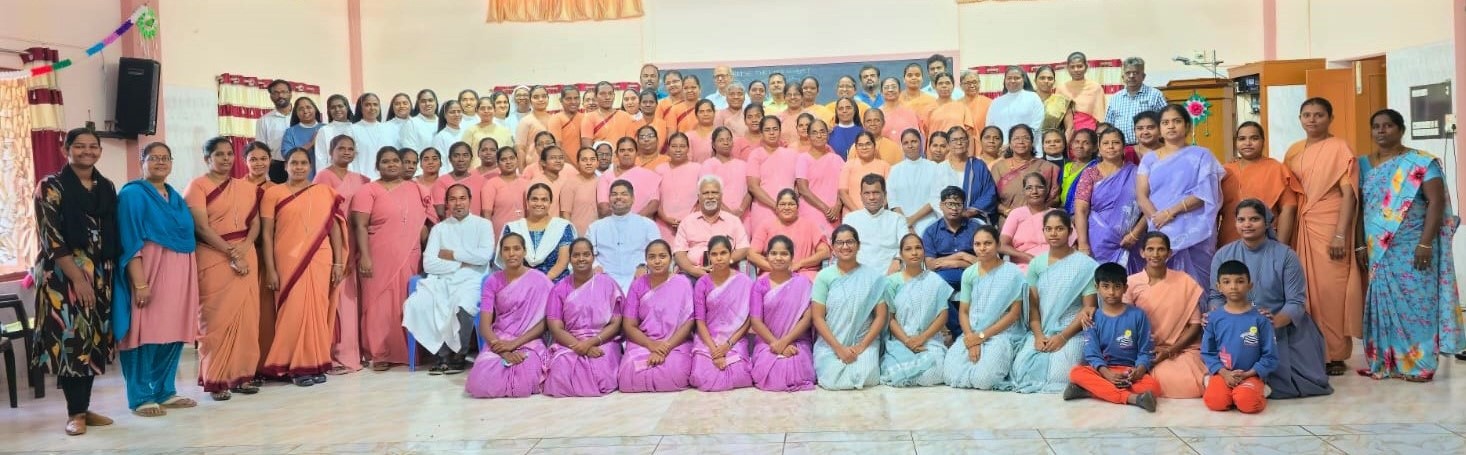
The Tamil Nadu Bishops Council (TNBC)’s Commission for Catechetics organized a two-day formation program titled MUSIC-CAT (“Catechesis through Music”) on 6 and 7 December 2025 at TNBCLC, Tindivanam. Around 90 participants, including priests, religious sisters, and lay catechists from various dioceses of Tamil Nadu took part in the program.
Catechesis through Music (or MUSIC-CAT) is a formation program coordinated by Rev. Fr. Benedic Analin, Secretary, Commission for Catechetics. The purpose of the program was to empower catechists to use music as an effective medium for proclaiming the Gospel, understand the Second Vatican Council’s teachings on sacred music, and gain skills in composing meaningful and Scripture-based songs for catechesis. The sessions were led by Rev. Fr. Jesudoss SDB, Director of Deepagam – Centre for Catechesis and Faith Formation, Chennai, along with his team.
Day One (December 8, 2025)
On day one (December 06), during the introductory session, participants introduced themselves by sharing details about their ministry and singing a favorite religious song. This helped build familiarity and a spirit of unity within the group.
The first session (theme: The Gospel and Music-CAT — A Tool for Catechesis) was led by Fr. Jesudoss SDB, who explained how Gospel teachings can be effectively conveyed through catechetical music.
During the session he reiterated thus:
• “Music can make Gospel teachings more memorable and emotionally engaging.”
• “Biblical narratives can be transformed into catechetical lyrics.”
• “Harmony, rhythm, and tone contribute significantly to theological expression.”
Deepagam songs such as Aatukottilin Vaayil Naane, Vaarungal En Thanthaiyin Aseervadapetravare, Poli Iraivakinargalai, and Ungal Kai were presented to illustrate the connection between Scripture and musical composition.
Fr. Benedic Analin during his first session themed “Vatican II Teachings on Sacred Music,” presented the doctrinal framework laid out by the Second Vatican Council.
He stressed that sacred music should:
• “Foster active participation in the Liturgy”
• “Uphold reverence and holiness within worship”
• “Serve the liturgical action and avoid entertainment-focused performance”
In the afternoon, “On Composing Songs for Different Catechetical Groups”, a practical session was held to discuss how music style and content must change depending on the audience:
| Audience | Music Style/Content | Example |
| Children | Simple words, repetition, lively rhythm, and action movements. | “Rabi Rabi,” “Azhiya Selvam” |
| Youth | Music that conveys the social teachings of Jesus and motivates discipleship. | “Thee Mootuvom,” “Anja Vendam” |
| Married Couples | Songs focusing on faith, family unity, and love (1Cor 13). | “Anbe Thalaisiranthathu” |
| Priests and Religious | Encouraging songs for pastoral struggles and mission life. | “Yesuvin Thiru Idhayame,” “Illainargal Emai” |
| Parish Community | Music that invites conversion, reflection, and unity in Christ. | “Naam Uyirtha Makkala,” “Thanthaiyin Illaththai” |
The participants learned how musical structure supports effective catechesis.
In the evening, a Group Preparation Activity was held wherein participants formed into ten groups, and each group selected a Gospel song from Deepagam’s song list. They spent one hour planning a creative catechetical presentation involving music, movements, narration, or drama.
The day concluded with the Holy Rosary and the celebration of the Holy Eucharist.
Day Two (December 7, 2025)
The formation program MUSIC-CAT (“Catechesis through Music”) was conducted at TNBCLC.
The participants began the next day with morning prayer and the Second Sunday of Advent Holy Mass.
The first session of the day was ‘Liturgy and Music in the Mission of the Church.’ Deepagam’s liturgical compositions commonly used in Mass (Kyrie, Gloria, Creed, Sanctus, Our Father, etc.) were presented. Fr. Jesudoss emphasized the following points:
• The Church must preserve its sacred musical heritage.
• At the same time, music must respond to the “signs of the times” to inspire young people while maintaining liturgical dignity.
Mrs. Pauline Rose, (Deepagam Collaborator and Coordinator), during the second session, delved on the theme “Psalms and Psychological Healing” said,
• “Musical psalms help individuals deal with anxiety, fear, and emotional suffering.”
• “Jesus Himself relied on the Psalms during His earthly ministry and Passion.”
• “The Psalms provide a safe spiritual space for expressing human struggles while trusting in God’s providence.”
Under the practical guidance of Fr. Jesudoss, the participants learned to “Compose Music from the Scripture.” This involved,
• Identifying tone and emotion in the Sacred Scripture
• Translating phrases into rhythmic melody
• Forming complete compositions using the text itself
At the conclusion of this session, several volunteers shared their newly composed musical lines, gaining confidence and receiving constructive feedback.
The practical session concluded with the ten groups presenting their Gospel-themed performances through singing, dance, dramatization, and symbols. The presentations reflected creativity, collaboration, and shared mission.
Program Outcome
The MUSIC-CAT program helped participants rediscover the profound impact music has in communicating the Gospel. They gained the confidence to use music intentionally in catechetical lessons, especially for children who respond enthusiastically to joyful and melodious learning.
Participants expressed that they learned to:
1. Teach catechism to children using music as a dynamic and powerful tool
2. Convey Gospel-based teachings through well-composed songs.
3. Enrich liturgical prayer and evangelization with sacred music.
4. Compose music directly from Scripture and tailor it to different audiences.
The program strengthened missionary enthusiasm, promoted collaborative ministry, and revealed creative musical talents within the group. Participants left with renewed commitment to proclaim Christ joyfully through music — making catechesis both spiritually enriching and engaging for the faithful.
Participants were given access to about one hundred Gospel-based songs produced by Deepagam for immediate catechetical use in their dioceses.